
Imagine this…
Imagine a young boy. Let’s call him Jonny.
He’s sitting quietly at the top of the stairs, hearing voices raised below. His dad is angry again. His mum is upset. This isn’t new — but tonight feels different.
Later, Jonny sees something he can’t unsee. His dad with another woman. The betrayal is clear, even to a child.
When Jonny confronts him, his dad brushes it off.
‘Relax. Your mother will never leave me.’
In that moment, something shifts.
Not just confusion. Not just hurt. But a kind of internal conflict that has nowhere to go.
Jonny despises what he sees. He tells himself he will never be like his father.
But children don’t just reject what they witness — they absorb it, especially when there’s no safe way to process it.
The other side of the story
At the same time, something else is happening.
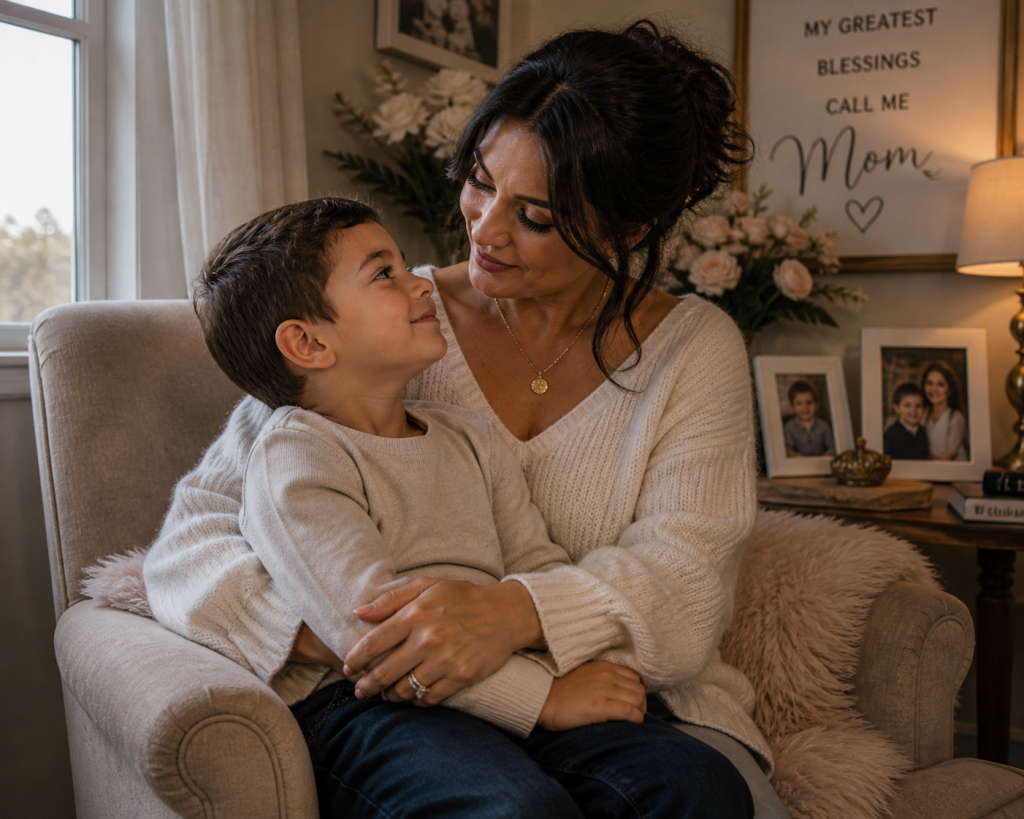
His mum, hurt and emotionally overwhelmed, turns inward. But not entirely alone — she turns toward Jonny.
He becomes her comfort.
Her safe place.
The one who listens.
The one who understands.
Without realising it, the roles begin to blur.
He is no longer just a child.
He becomes:
- The one she leans on
- The one she confides in
- The one who makes her feel better
He is adored, needed, and placed on a pedestal.
To a child, that can feel like love.
But it also comes with pressure.
Because now, his value is tied to being everything she needs him to be.
Living between two realities
So Jonny grows up holding two conflicting worlds.
One where love is unstable, unpredictable, and unsafe.
Another where love is intense, consuming, and conditional.
He learns to cope the only way he can.
He builds a version of himself that protects him from both.
A version that:
- Stays in control
- Avoids vulnerability
- Protects against shame
- Holds onto an image of strength
And crucially — he lives in denial of the parts of himself that resemble what he saw growing up.
Because facing that would be too painful.
When the pattern repeats
As an adult, Jonny may not consciously choose to behave like his father.
In fact, he may strongly believe he is nothing like him.
But the patterns are still there — just expressed differently.
He may:
- Struggle with accountability
- Shift blame without realising
- Seek validation while avoiding true intimacy
- Alternate between closeness and distance
Not because he’s choosing harm, but because he never learned a stable, secure way to relate.
This isn’t just about men
While this example focuses on a boy, these patterns are not gender-specific.
The same dynamics can shape girls and women too.
For example:
A girl who grows up needing to be “perfect” to receive love may develop a strong external identity, while feeling deeply insecure underneath.
Another may learn to gain control through emotional withdrawal, guilt, or playing the role of the victim.
Others may become highly attuned to image, relationships, or status as a way to feel safe and valued.
The underlying thread is often the same:
A fragile sense of self, built around survival rather than security.
Other ways narcissism can form
Not every story looks like Jonny’s.
Narcissistic traits can also develop through:
- Emotional neglect — where needs are ignored rather than overwhelmed
- Inconsistent parenting — where love feels unpredictable
- Overpraise without grounding — creating pressure to maintain an image
- Trauma or instability — leading to a need for control
- Insecure attachment — making closeness feel unsafe
There isn’t one cause. It’s usually a combination.
The important boundary
Understanding how narcissism is formed can bring clarity.
It can help you make sense of behaviour that once felt confusing.
But it’s important not to lose yourself in that understanding.
Someone’s past may explain their behaviour.
It does not make it your responsibility to fix it.
Final thought
If you find yourself trying to piece together someone’s story, it’s often because their behaviour doesn’t match their words.
And that creates confusion.
But clarity doesn’t come from analysing them endlessly.
It comes from asking yourself:
How does this make me feel — and is that something I want to live with?