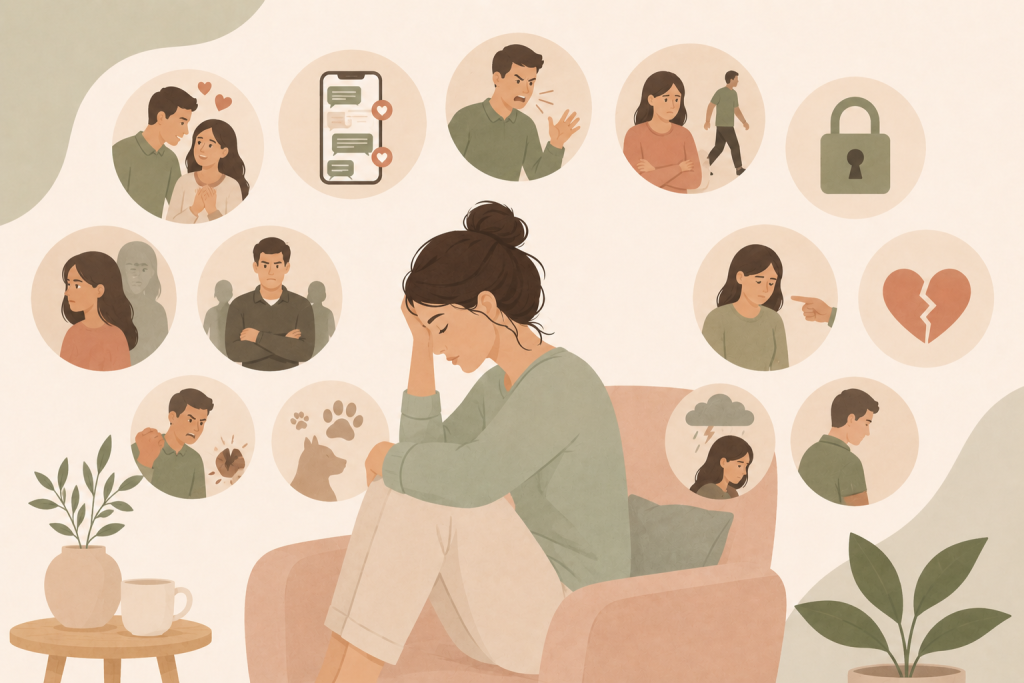

Unhealthy relationships rarely begin with obvious abuse. In many cases, the early stages feel intense, exciting and emotionally close. The warning signs often appear gradually, making them easy to dismiss or explain away.
Many people only recognise the red flags later when the behaviour becomes more controlling, emotionally harmful or frightening.
Learning to spot early warning signs can help you better understand unhealthy relationship patterns before they become deeply established.
Red Flags Are Often Subtle at First
Early warning signs are not always dramatic. Some behaviours may initially seem like affection, protectiveness or strong emotional attachment.
Over time, however, those same behaviours can become controlling, manipulative or emotionally draining.
You may notice yourself feeling increasingly anxious, responsible for another person’s emotions or afraid of upsetting them.
Many unhealthy relationships develop slowly enough that the changes become normalised.
Intensity That Feels Overwhelming
One early red flag that can feel confusing is love bombing. This is when someone overwhelms you with excessive attention, affection or reassurance very early in the relationship.
At first, it can feel exciting, flattering and emotionally intense. You may feel as though you have finally met someone who completely understands you.
Love bombing may include:
- Constant texts, calls or attention
- Excessive compliments
- Grand romantic gestures very early on
- Talking about the future almost immediately
- Wanting commitment extremely quickly
- Saying you are “perfect” or “soulmates” very early
- Becoming emotionally intense before real trust has developed
Not all intense affection is unhealthy, and some people are naturally expressive or affectionate. The concern is usually how the behaviour makes you feel over time and whether the intensity later shifts into pressure, control or emotional instability.
In some unhealthy relationships, intense affection is followed by criticism, withdrawal, jealousy or controlling behaviour. This can leave you feeling confused because the relationship began so positively.
Healthy relationships usually develop steadily over time, allowing trust, consistency and emotional safety to build naturally.
Jealousy Disguised as Care
Jealousy is often minimised in relationships, especially early on. However, excessive jealousy can become emotionally controlling over time.
Warning signs may include:
- Becoming upset when you spend time with others
- Questioning who you are with or where you have been
- Needing constant reassurance
- Accusing you of flirting or cheating without reason
- Acting possessive over your time or attention
- Making you feel guilty for having independence
Healthy relationships allow trust, individuality and outside friendships.
Feeling Like You Are Walking on Eggshells
A major red flag is feeling nervous about another person’s reactions.
You may begin:
- Overthinking what you say
- Avoiding certain topics
- Trying to prevent arguments
- Monitoring their moods closely
- Changing your behaviour to keep the peace
- Feeling anxious before seeing or messaging them
Relationships should not leave you constantly feeling emotionally unsafe or tense.
Criticism That Slowly Damages Confidence
Some people gradually undermine confidence through criticism, sarcasm or subtle put-downs.
This may include:
- Making “jokes” at your expense
- Criticising your appearance or personality
- Comparing you to other people
- Dismissing your feelings
- Talking down to you during disagreements
- Making you feel overly sensitive for being hurt
Repeated criticism can slowly affect self-esteem and emotional wellbeing.
Controlling Behaviour
Control in relationships is not always obvious at first. It can begin through small behaviours that slowly increase over time.
Examples may include:
- Wanting access to your phone or passwords
- Monitoring social media activity
- Telling you what to wear
- Trying to influence who you spend time with
- Becoming angry when you make independent decisions
- Pressuring you to prioritise them above everything else
Healthy relationships support independence and mutual respect.
Inconsistent Behaviour and Mixed Signals
Some unhealthy relationships involve emotional unpredictability. One moment the person may seem loving and attentive, and the next they may become distant, cold or critical.
This inconsistency can leave you feeling confused and emotionally unsettled.
You may find yourself constantly trying to regain the “good version” of the relationship or blaming yourself for the sudden change in behaviour.
Blame Shifting and Lack of Accountability
Another warning sign is when someone consistently avoids responsibility for their behaviour.
This may look like:
- Turning arguments back onto you
- Blaming stress, work or other people
- Minimising your feelings
- Refusing to apologise genuinely
- Making you feel responsible for their reactions
- Saying everything is your fault after disagreements
Over time, blame shifting can create confusion and self-doubt.
Isolation From Other People
Unhealthy relationships sometimes involve gradual isolation from support networks.
This may happen through:
- Complaints about your friends or family
- Encouraging you to spend less time with others
- Creating tension whenever you make independent plans
- Making you feel guilty for socialising
- Acting unhappy when attention is not focused on them
Isolation can increase emotional dependence within the relationship.
Trust Your Feelings
One of the most important things to pay attention to is how the relationship makes you feel over time.
Even if you cannot fully explain why, persistent feelings of anxiety, fear, confusion or emotional exhaustion matter.
A healthy relationship should make you feel:
- Safe
- Respected
- Heard
- Supported
- Free to be yourself
- Comfortable expressing boundaries
If you regularly feel emotionally drained, fearful or diminished, it is important not to ignore those feelings.