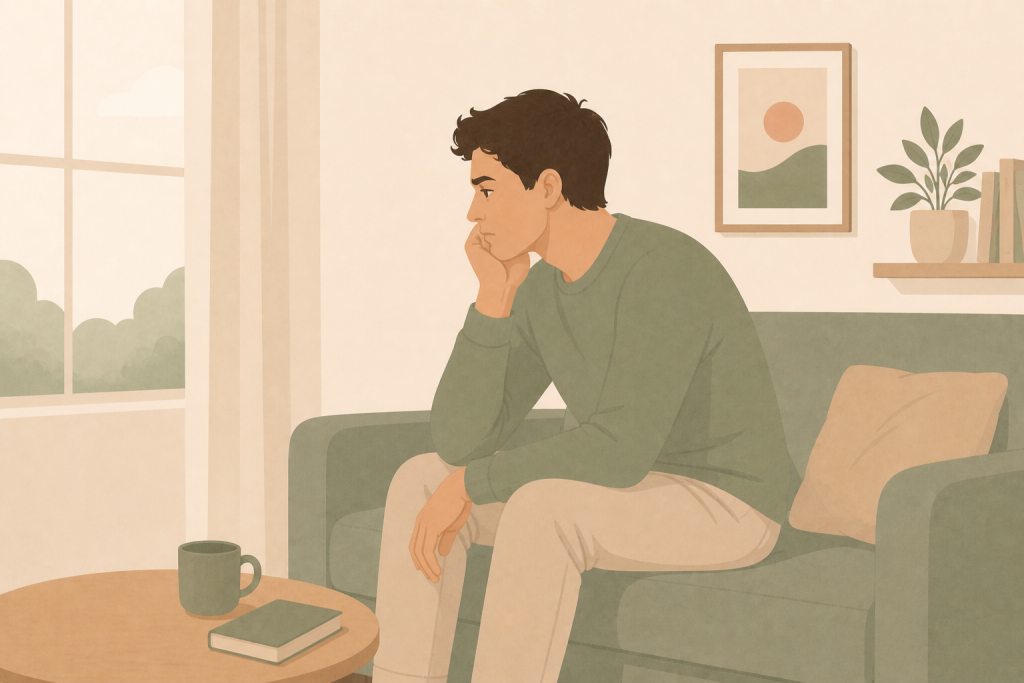

Men Can Be Victims Too
Domestic abuse happens to men. It happens more often than most people realise, more often than most men report, and far more often than society generally acknowledges. If you are a man experiencing abuse at the hands of a partner, this article is for you.
What you are going through is real. It counts. And you deserve support just as much as anyone else does.
The Statistics Nobody Talks About
One in three victims of domestic abuse in the UK is male. That is not a fringe figure — consistent research and crime survey data gathered over many years supports it. Around 757,000 men experience domestic abuse in England and Wales every year.
Those numbers are likely an undercount. Male victims report at significantly lower rates than female victims, meaning the true scale probably exceeds any official figure.
Why Men Don’t Come Forward
The barriers men face when seeking help are real and significant. Understanding them matters — both for men experiencing abuse and for the people around them.
Shame and disbelief sit at the centre of it for most men. The cultural narrative around masculinity makes it extraordinarily difficult to say out loud that a partner is hurting you. Many men fear nobody will believe them — and that fear is not unfounded. Some men who have contacted police or sought help have faced dismissal, or worse, found themselves treated as the perpetrator rather than the victim.
The idea that it doesn’t count creates another powerful barrier. Society conditions men to minimise physical and emotional pain. Where abuse is primarily emotional, psychological or financial rather than physical, many men struggle to name it as abuse at all. They tell themselves it is not serious enough. That they should handle it. That others have it worse.
Fear of losing their children stops many men from coming forward. The belief — sometimes well founded — that family court will disadvantage them can make staying feel like the only way to protect their relationship with their kids.
The lack of provision is a practical barrier that is hard to overstate. Refuge spaces for men in the UK remain desperately limited compared to those available for women. Many men simply do not know where to turn, and when they look, they find very little waiting for them.
What Abuse Against Men Can Look Like
Abuse does not always look the same regardless of who experiences it, and male victims sometimes face forms that carry particular weight given the social context around them.
Physical abuse happens — and the assumption that a man can simply overpower a female partner is both wrong and harmful. It ignores the reality of shock, fear, emotional paralysis and the complex loyalty that keeps people in abusive relationships regardless of physical size.
Emotional and psychological abuse is extremely common. Constant criticism, humiliation, gaslighting, threats and manipulation cause profound harm regardless of the gender of the person on the receiving end.
Sexual coercion within relationships affects men too, though almost nobody discusses it. The cultural assumption that men are always willing makes this particularly isolating for male victims.
Financial control — restricting access to money, sabotaging employment, creating debt — works identically regardless of which partner wields it.
Using children as a weapon is something male victims frequently describe. Threats to take the children, make false allegations or turn them against their father are powerful tools of coercive control.
The Particular Loneliness of Being a Male Victim
Many men who experience abuse describe a specific kind of loneliness that goes beyond the isolation most victims feel. Almost no cultural reflection of their experience exists. Films, campaigns and conversations about domestic abuse rightly centre female victims given the scale — but the near-total absence of male victims in that conversation leaves men feeling invisible.
Many never recognise what is happening as abuse because nobody has described it in a way that matches their experience. Some try to talk to friends and meet jokes or disbelief. Others internalise the idea that a man experiencing harm from a woman is somehow embarrassing rather than serious.
That loneliness is one of the most damaging parts of the experience — and the failure of the world around them creates it, not anything lacking in them.
If Someone You Know May Be Experiencing This
If you suspect a man in your life is experiencing abuse, how you respond matters enormously. Jokes, scepticism or minimising — even unintentionally — can close the door on a conversation that took enormous courage to start.
Believe him. Listen without judgement. Avoid telling him what to do. Let him know that what he is describing sounds serious and that support exists. Sometimes that is all he needs to take the next step.
You Are Not Less of a Man For Experiencing This
Abuse does not target weakness. It targets people — using love, loyalty, shame and fear as tools regardless of gender.
Staying in an abusive relationship takes no weakness. Struggling to leave takes no weakness. Finding it hard to talk about takes no weakness. These are human responses to a situation deliberately designed to make you feel trapped, confused and alone.
Reaching out for help is not weakness either. It is the hardest and most important thing you can do — and support is available to you right now.
The Men’s Advice Line runs in the UK specifically for male victims of domestic abuse – see helplines. Leaving the relationship first is not a requirement to call. Experiencing physical violence is not a requirement either. The only requirement is being ready to talk to someone who will take you seriously.
That someone exists. You are not alone in this.